Swapping to Stablecoins: Smart Move or Mistake?
A practical guide to deciding when to rotate into stablecoins, with real scenarios, risks, and simple swap tips.

| Move you make | Upside | Downside | Best for |
|---|---|---|---|
| Hold 100% crypto | Max upside if it pumps | Max pain if it dumps | Long time horizons (2–5+ years), high conviction |
| Rotate 10%–40% to stablecoins | Lower volatility, optionality | Some opportunity cost | Most people, most markets |
| Rotate 70%–100% to stablecoins | Strong downside protection | You can miss big upside | Short time horizons, major uncertainty, need cash soon |
That’s usually the moment people start typing the same question into Google: “Should I swap to stablecoins or just hold?”
Because here’s the uncomfortable truth: in crypto, profits aren’t profits until you lock them in. And stablecoins are one of the simplest “pause buttons” you can press—without leaving the crypto world.
But stablecoins aren’t a magic shield. They come with trade-offs, risks, and opportunity cost (the painful feeling of watching your coin pump after you sold).
Let’s make this decision practical, not emotional.
TL;DR (quick decision box)
- Swapping to stablecoins is smart when you’re protecting gains, reducing volatility before a big life expense, or waiting for a better entry.
- It’s usually not smart when you’re panic-selling, ignoring stablecoin risks, or constantly rotating based on vibes.
- A simple approach many people use: rotate 10%–50% into stablecoins depending on your timeframe and stress level.
- If you do swap, use a non-custodial, no-KYC platform so you keep control of your funds—like SwapRocket via /exchange.
---
The real job of stablecoins (and what they’re not)
Stablecoins are meant to behave like digital cash—usually pegged to the US dollar.So instead of your portfolio swinging 8% in a day, a stablecoin position is designed to sit near $1.00.
Market snapshot (timestamped)
As of 2025-12-23, Tether (USDT) is $1.00 (24h -0.02%).That tiny move is basically the point: stablecoins aim to be boring.
What stablecoins are great for
Think of stablecoins like pulling your car into a rest stop.You’re still on the highway (crypto), but you’re not speeding in the fast lane (volatile assets).
- Common reasons people use stablecoins:
- Locking in gains after a big move
- Reducing portfolio volatility during uncertain markets
- Waiting for a better entry without going back to fiat
- Moving value across chains quickly (depending on the stablecoin network)
What stablecoins are not
Stablecoins are not: - A guaranteed “risk-free” asset (nothing in crypto is) - A perfect substitute for a bank account - Always interchangeable (USDT on Ethereum ≠ USDT on Tron in terms of fees and speed)If you want a deeper breakdown of the “smart vs risky” angle, this post pairs nicely with what you’re reading now: When Swapping to Stablecoins Is Smart (and Risky).
---
When swapping to stablecoins is genuinely smart
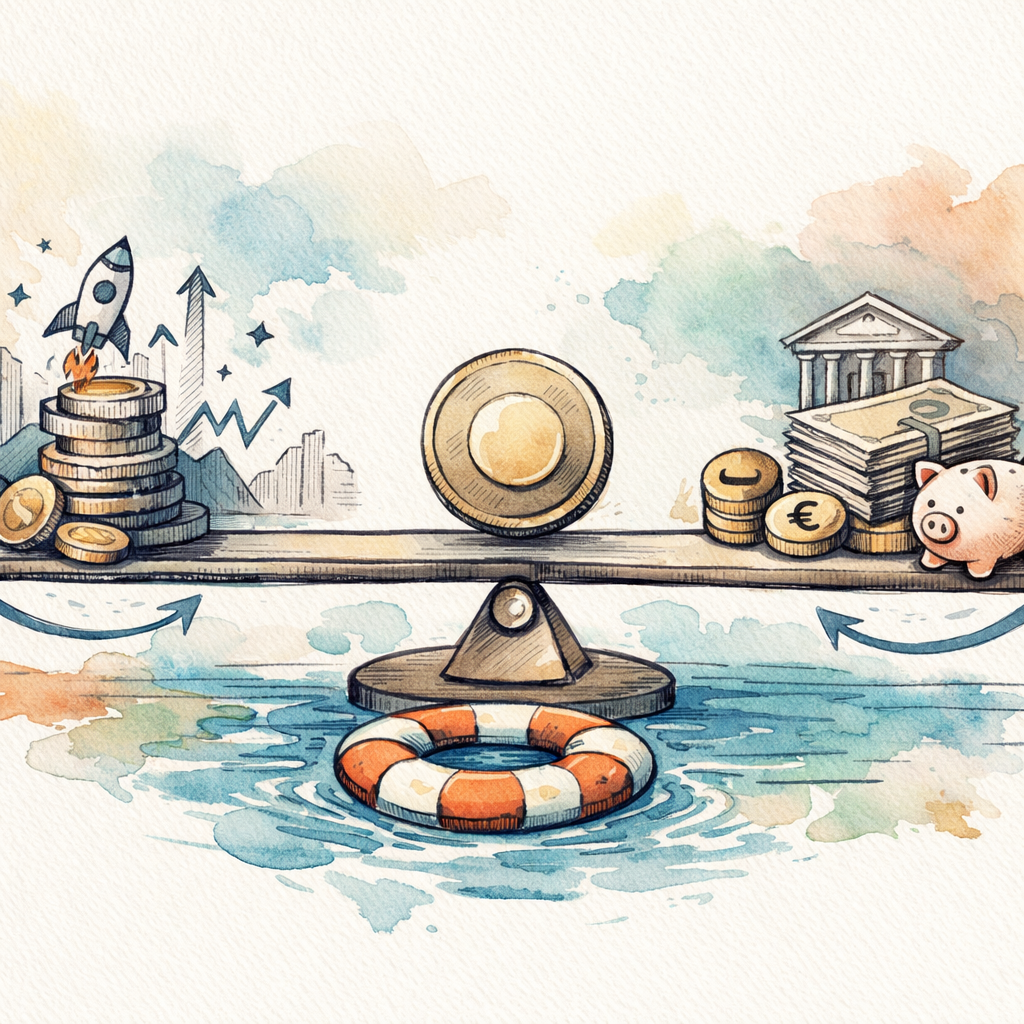
If you’ve ever watched a +40% week turn into a -25% month, you already understand why stablecoins exist.
Here are the scenarios where swapping to stablecoins is less about “timing the market” and more about managing your life.
1) You’re protecting gains after a big run
Let’s say you bought SOL and it ripped.You’re not trying to sell the top perfectly. You’re just trying not to give back the entire move.
- A common move is to skim profits:
- Sell 20%–30% into USDT after a major rally
- Keep the rest in the original coin for upside
That way, if the coin pulls back 30%, you’ve already banked some value. And if it keeps running, you still participate.
If your “profit-taking” coin is ETH, the most searched behavior looks like this in real life: an ETH to USDT swap. (You can do it directly here: /exchange/eth-to-usdt.)
2) You have a real-world bill coming up
Crypto is fun until rent is due.If you need cash in the next 7–60 days, holding 100% volatile assets is basically gambling with your timeline.
- Stablecoins are useful here because they:
- Reduce the chance a market dip ruins your plan
- Let you stay in crypto while you decide whether to off-ramp
This is one of the few cases where “boring” is a superpower.
3) The market is choppy and you want optionality
Optionality is a fancy word for: “I want the ability to act when a great opportunity shows up.”If your portfolio is fully invested, every new opportunity requires you to sell something—often at a bad time.
- Keeping 10%–25% in stablecoins can act like dry powder:
- A sudden dip hits
- You swap stablecoins into the asset you want
- You don’t have to panic-sell another position
4) You’re rotating from high beta to low beta
In plain English: you’re moving from “wild swings” to “calmer holdings.”- Example:
- You rode a meme coin up 3x
- Now you want to reduce risk without leaving crypto
- Swapping a portion into USDT can stabilize your portfolio’s daily swings
This is especially common when people feel the market mood shifting from “easy mode” to “anything can dump.”
5) You’re moving between ecosystems and want less price risk
Sometimes you’re not bearish—you’re just relocating value.- For example:
- You’re exiting a Solana token and want to buy on Ethereum
- You’re bridging mentally, not just technically
During that transition, stablecoins can reduce “in-transit volatility.”
If you’ve ever searched something like “solana to usdt” or “sol to usdt,” that’s usually what’s happening. SwapRocket supports quick conversions via the /converter (including /converter/sol/usdt).
---
One simple comparison table: what you gain vs what you give up
Here’s the trade-off in one glance.The table isn’t telling you what to do. It’s telling you what you’re choosing.
---
When stablecoins can backfire (and how to reduce risk)

Stablecoins solve one problem (volatility) but introduce a few others.
If you’re going to use them, you should know the trade-offs—without spiraling into doom scenarios.
1) Opportunity cost: the “I sold too early” problem
This is the most common stablecoin regret.You swap to USDT, you feel safe… and then your coin goes up another 25%.
If that would emotionally wreck you, don’t rotate too aggressively.
- A practical compromise:
- Rotate a slice, not the whole position
- Set a rule like: “I only rotate after a +30% move”
This turns it from a gut-feel decision into a repeatable habit.
2) Stablecoin-specific risks (peg, issuer, and chain risk)
Stablecoins try to track $1.00, but they’re not all identical.- Three real-world risk buckets:
- Peg risk: the price can drift under stress (even small deviations matter if you’re leveraged)
- Issuer/counterparty risk: some stablecoins rely on centralized reserves
- Chain risk: USDT on one network can be cheap and fast, while another network can be expensive and congested
- Risk-reduction moves (simple, not perfect):
- Don’t treat stablecoins like long-term “set and forget” savings
- Consider splitting across stablecoins if you’re holding large amounts
- Be intentional about the network you’re using (fees can vary wildly)
3) You swap to stablecoins because you’re scared (not because you have a plan)
This is the “panic sell disguised as risk management” situation.- If your process is:
- Price drops 8%
- You feel sick
- You swap everything to stablecoins
…then you’re likely to buy back higher later.
- A better approach is to decide in advance:
- What would make you rotate 20% into stables?
- What would make you rotate back?
If you want help thinking through that “now vs hold” decision, you’ll like: Should You Swap to Stablecoins Now or Just Hold?.
4) Hidden costs: fees, spreads, and bad routes
Not all swaps are priced equally.- Even if the stablecoin is “$1,” you can still lose money to:
- Poor conversion routes
- Wide spreads during volatility
- Network fees (especially on congested chains)
This is where using a platform that aggregates liquidity and keeps the UX simple really matters.
- On SwapRocket, you can:
- Compare routes quickly through /exchange
- Use the /converter to sanity-check amounts before swapping
- Keep custody of your funds (non-custodial), and skip KYC (privacy-first)
---
A simple framework: how much should you rotate into stablecoins?
You don’t need an MBA. You need a rule you can live with.Here are three practical “profiles” that work for real humans.
Profile A: The long-term holder (minimal stablecoins)
If your horizon is years, you probably don’t want to be in and out constantly.- A typical stablecoin allocation:
- 0%–10% (mostly for opportunities)
- When you might rotate more:
- You’re up massively (think 2x–5x) and want to de-risk a portion
Profile B: The balanced investor (some stablecoins)
This is the “I like upside, but I also like sleeping” profile.- A typical stablecoin allocation:
- 15%–40% depending on market conditions
- How it behaves:
- You still benefit from upside
- You can buy dips without selling in panic
If you want the mindset behind this, this is a good companion read: How Traders Use Stablecoins to Sleep at Night.
Profile C: The short-term planner (more stablecoins)
If you need money soon, or you’re in a high-stress life period, stability matters.- A typical stablecoin allocation:
- 50%–90%
This isn’t “weak hands.” It’s aligning your portfolio with your timeline.
Two questions that clarify everything
If you’re stuck, answer these:- 1) If your portfolio dropped 25% this month, would you still hold?
- If yes: you can stay more invested.
- If no: you probably need some stablecoin cushion.
- 2) Do you have a date you need funds by?
- If yes: stablecoins become more rational.
- If no: you can prioritize long-term growth.
---
Common scenarios (with real numbers) so you can “see” the decision
Sometimes advice is too abstract. Let’s make it tangible.Scenario 1: You’re up 80% on ETH and don’t want to round-trip it
You bought ETH at $2,000. It’s now $3,600.You’re not calling a top. You just want to protect some gains.
- A reasonable action:
- Swap 25% of your ETH into USDT
- Keep 75% as ETH
- If ETH drops 20% next week:
- Your stablecoin slice stays roughly stable
- Your overall drawdown is smaller than if you stayed 100% ETH
You can execute this kind of move directly via SwapRocket’s ETH to USDT page: /exchange/eth-to-usdt.
Scenario 2: You want to convert BTC gains to a stablecoin for a purchase
You’re planning a $3,000 expense in 30 days.If BTC drops 15% during that month, your plan gets messy.
- A practical move:
- Convert the amount you’ll need into stablecoins now
- Leave the rest in BTC if you’re still bullish
If you want a quick estimate before swapping, use SwapRocket’s Bitcoin converter: /converter/btc/usdt (this matches what people search for as a “bitcoin to USDT converter”).
Scenario 3: You’re rotating from SOL to USDT to wait for a cleaner setup
You’re not bearish on SOL long-term.You just don’t like the current risk/reward.
- A patient move:
- Swap a portion of SOL to USDT
- Set a plan for re-entry (price level, time window, or DCA schedule)
You can check the conversion path quickly via /converter/sol/usdt.
---
How to swap to stablecoins without giving up privacy (and without custody risk)
This is where a lot of people accidentally downgrade their safety.- They decide to “de-risk” by moving funds to a platform that:
- Custodies their crypto
- Requires KYC
- Can freeze withdrawals or delay access
If your goal is control and flexibility, consider using a non-custodial, no-KYC swap.
What “non-custodial” actually means in practice
It means you’re not creating an account and parking funds in an exchange wallet.You’re swapping from your wallet, and the platform is designed to execute the conversion without turning into your bank.
- SwapRocket is built around that idea:
- Non-custodial: you control your keys
- No KYC: privacy-first by default
- Fast swaps: typically completed in minutes (network conditions vary)
- 200+ assets: plenty of routes beyond just majors
To start a swap, head to /exchange. If you’re brand new, the FAQ is refreshingly clear: /faq.
Quick execution checklist (to avoid classic mistakes)
Before you swap into stablecoins: - Double-check you’re using the right network for your wallet and destination - Don’t ignore fees—especially if you’re moving small amounts - If you’re swapping a large amount, consider splitting into 2–3 swaps to reduce slippage riskIf you also want on-ramps, you can explore options here: /buy-crypto.
---
Stablecoins 101: which stablecoin should you use?
Most people default to USDT because it’s widely supported and liquid.- But the “best” stablecoin depends on what you’re doing:
- Trading liquidity: usually favors the most widely supported stablecoins
- Moving funds cheaply: often depends more on the chain than the stablecoin ticker
- Holding for longer: may justify spreading risk (rather than relying on a single issuer)
SwapRocket supports a wide set of assets—if you’re curious, browse: /supported-cryptocurrencies.
---
FAQs: stablecoin swaps in plain English
Is swapping to USDT the same as cashing out?
Not exactly.You’re reducing volatility, but you’re still in crypto rails. You haven’t necessarily moved funds to your bank.
When should I swap back out of stablecoins?
Ideally when your reason for swapping is no longer true.- Examples:
- You swapped to wait for a better entry → you got your entry
- You swapped because you needed funds soon → the expense is paid
- You swapped because volatility was stressing you out → you rebuilt a plan and can re-risk gradually
Can I convert ETH to USDT quickly without making an account?
Yes—using a no-KYC swap flow.If this is your specific need, start with /exchange/eth-to-usdt.
What’s the difference between using a converter and an exchange page?
Think of /converter as your “quick math + reality check.”The /exchange flow is where you actually execute the swap.
Are stablecoins always $1.00?
They’re designed to be close, but they can deviate slightly. Even today’s snapshot shows tiny movement (USDT: $1.00, 24h -0.02%).Those small deviations usually don’t matter for everyday swaps, but they can matter more during extreme market stress.
---
The bottom line: stablecoins are a tool, not a prediction
The best stablecoin swaps aren’t based on perfect market calls.- They’re based on:
- Protecting a portion of gains
- Matching your portfolio risk to your timeline
- Keeping flexibility when markets get weird
If your stablecoin plan helps you avoid emotional decisions, it’s probably doing its job.
---
Related reading (if you want to go deeper)
- When Swapping to Stablecoins Is Smart (and Risky) - Should You Swap to Stablecoins Now or Just Hold? - How Traders Use Stablecoins to Sleep at Night---
Ready to swap into stablecoins—without KYC and without giving up control?
If you want a fast, privacy-first way to rotate into stablecoins (or back out of them), use SwapRocket.Start your swap here: /exchange.
Prefer to check the numbers first? Try the real-time converter: /converter.
And if you have questions before you move funds, the FAQ is worth a quick look: /faq.