Should You Swap to Stablecoins Now or Just Hold?
Thinking about rotating into USDT or USDC? This guide shows when swapping to stablecoins is a smart move, when it isn’t, and how to decide in real time.

| Strategy | Pros | Cons | Best for |
|---|---|---|---|
| Hold BTC/ETH/SOL/XRP | Max upside, no timing risk, simpler taxes | Big drawdowns, stressful volatility | Long‑term conviction, multi‑year horizons |
| Swap to USDT/USDC/DAI | Stable value, easier planning, dry powder ready | Missed upside, issuer/depeg risk, taxable events | Short‑term needs, tactical traders, hedging |
Your coin finally pumps. Maybe it’s ETH ripping from $1,600 to $3,000, or SOL doubling in a month. You’re staring at a green PnL and thinking:
“Do I swap into USDT now… or keep holding and hope for more?”
That tiny decision – swap to stablecoins or hold – is one of the biggest drivers of whether you end up building serious wealth or just collecting war stories.
This guide is about exactly that: when swapping to stablecoins is a smart move, and when it quietly hurts you more than it helps.
Quick note before we dive in: as of December 2025, no live market data is used here. Any prices or percentages are just illustrative examples, not real-time quotes.
---
TL;DR – When Swapping to Stablecoins Makes Sense>
- Smart: After big wins, before known high‑risk events, when you’ll need cash soon, or when you want dry powder for better setups.
- Risky: In the middle of strong trends just because you’re scared, or when you haven’t thought about taxes, depeg risk, or missing the next leg up.
- Practical: Use non‑custodial, no‑KYC swaps (like SwapRocket) to convert BTC/ETH/SOL to USDT or USDC without parking funds on a centralized exchange.
---
Why Stablecoins Exist (And What They Actually Do for You)
Stablecoins aren’t just a boring version of crypto. They’re how people in a 24/7, hyper‑volatile market create “cash” without leaving crypto.
Instead of jumping back to a bank account every time you want to de‑risk, you can rotate into a stablecoin like USDT, USDC, or DAI. They’re designed to track $1, while still living on‑chain.
The real jobs stablecoins do
Stablecoins help you:
- Lock in gains without converting to fiat
- Sit out volatility without leaving the market entirely
- Move value between chains or platforms cheaply and quickly
- Keep dry powder ready to deploy on the next opportunity
That’s why queries like “ETH to USDT converter”, “BTC to USDT”, and “SOL to USDT” show up so much in search data. People aren’t just asking how to swap – they’re asking if they should.
On SwapRocket’s converter, you can treat any pair – for example, BTC to USDT or SOL to USDT – as exactly that: your on‑chain “cash out” button.
The part nobody likes to talk about: stablecoin risks
Stablecoins feel safe because the price doesn’t move much. But there’s more going on:
- Centralization risk – Many stablecoins can be frozen by the issuer at the address level.
- Depeg risk – In stress events, even top names have briefly traded at $0.90–$0.97.
- Regulatory risk – Issuers operate in the traditional financial system, with all the oversight that comes with it.
So yes, swapping volatile assets like BTC or SOL to USDT can reduce price swings, but you’re trading market volatility risk for issuer and regulatory risk.
The key question isn’t “Are stablecoins safe?”
It’s: “Are stablecoins the right risk for what I’m trying to do right now?”
Let’s work through that.
---
When Swapping to Stablecoins Is a Smart Move
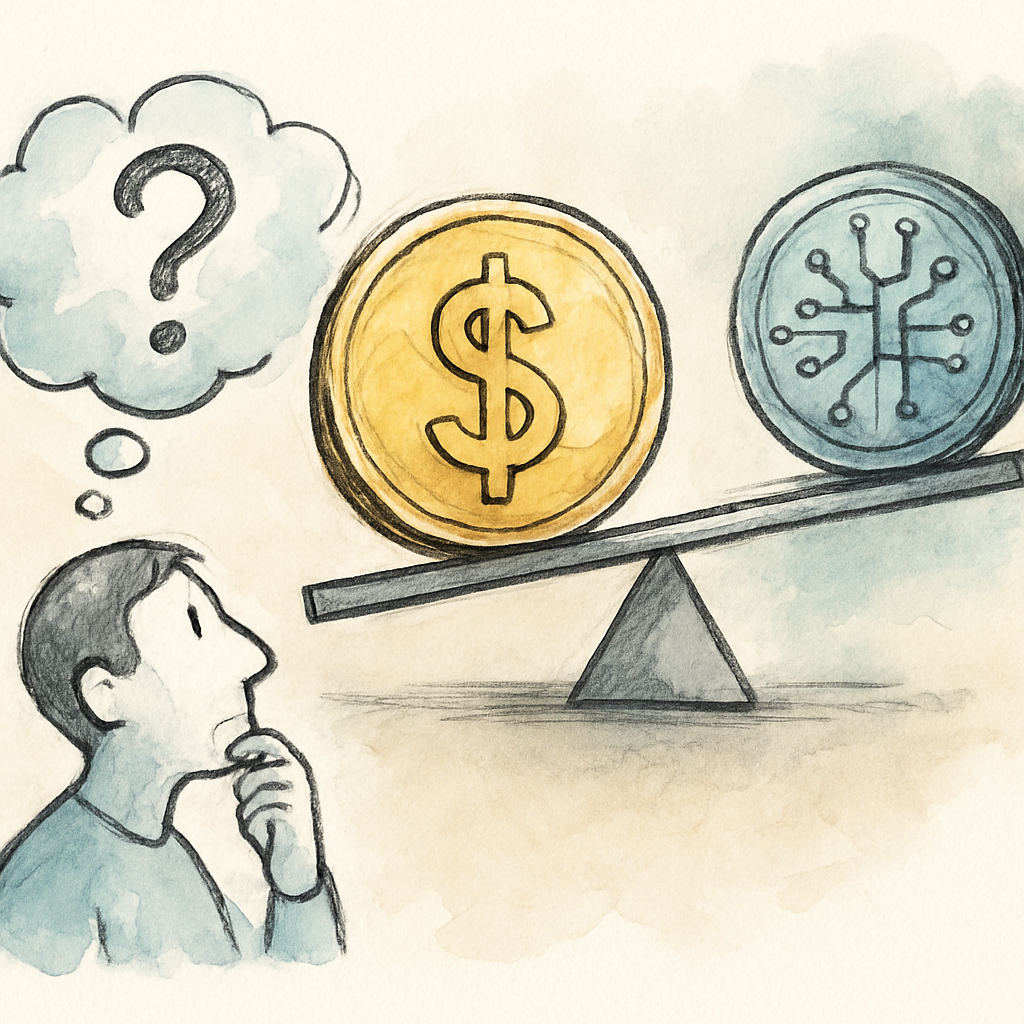
There are moments when moving into USDT, USDC, or another stable is the most rational, professional thing you can do.
Here are the big ones – with real‑world style examples.
1. After a big move in your favor (locking in profits)
This is the classic one.
Say you bought ETH at $1,600 and it’s now at $3,200. You’re up 100%. You don’t want to round‑trip the trade back to break‑even if the market dumps.
One option: swap part of your ETH to USDT.
For example:
- You hold 5 ETH bought at $1,600 ($8,000 total cost basis)
- Price moves to $3,200 (your stack is now $16,000)
- You swap 2.5 ETH to USDT via an ETH to USDT swap
- You’ve effectively locked in your original capital and some profit, while keeping upside exposure with the remaining ETH
This is where a non‑custodial converter shines. Instead of sending ETH to an exchange, waiting for confirmations, doing KYC, then swapping… you just use a direct exchange interface like SwapRocket:
- Select ETH → USDT
- Enter the amount
- Get a deposit address
- Send from your wallet, receive USDT back – usually within minutes
You’ve banked gains, you still have upside, and you never gave up custody.
If you want to go deeper into this angle, check out How Traders Use Stablecoins to Sleep at Night – it’s basically a psychology manual for this exact move.
2. Before known high‑risk events
Some events massively spike volatility:
- Major central bank announcements (e.g., interest rate decisions)
- Critical regulatory news expected from the SEC or other agencies
- Big token unlocks or vesting cliffs
- High‑profile exchange drama rumors
If you know you won’t be at the screen (travel, work, sleep) while these play out, swapping to stablecoins before the event can be a smart protective move.
A common example:
- You’re holding BTC around a big macro announcement
- You don’t want a 10–15% intraday swing wrecking your short‑term plans
- You use a BTC to USDT converter to rotate part of your stack into USDT
Now, no matter which way BTC moves in those few hours, your “protected” portion is flat in dollar terms.
You can always rotate back in later via pairs like BTC to ETH or straight back from USDT to BTC using the same non‑custodial flow.
3. When you need fiat soon (rent, taxes, big expenses)
Here’s where being too aggressive hurts people.
If you know you’ll need money in the next 1–3 months for:
- Tax payments
- Rent or a house deposit
- Tuition or a large purchase
…it’s often smarter to:
- Swap your volatile coins (BTC/ETH/SOL) → stablecoins (like USDT)
- Then off‑ramp from stablecoins to fiat when ready
This turns wild market swings into a known number.
You can rotate into stables using a non‑custodial swap, park them in your wallet, then use a sell crypto or local offramp flow when the timing is right.
4. Building dry powder for the next opportunity
Sometimes the best trade is not trading.
If you just exited a big move – say you swapped SOL to USDT after a parabolic run using something like SOL to USDT – you might not want to jump straight into the next shiny alt.
Holding stablecoins gives you:
- Clarity – You’re not emotionally attached to a volatile chart
- Optionality – When something truly attractive appears, you can move instantly
- Discipline – It’s harder to revenge trade when your stack isn’t bleeding red or flashing green
On SwapRocket’s converter, you can see all available paths and treat USDT or USDC as your neutral “waiting room” between plays. Check the full list on the supported cryptocurrencies page.
5. Hedging exposure across different coins or chains
Let’s say most of your portfolio is in one ecosystem – maybe Solana, maybe Ethereum – and a big chunk of your net worth is suddenly tied to one chain’s fate.
Rotating a portion into a major stablecoin (like USDT or USDC) on a different chain can hedge that:
- You swap SOL → USDT (Solana chain)
- Then bridge or swap to USDT on another chain via a non‑custodial platform
Now, even if there’s a chain‑specific meltdown, some of your capital sits outside that blast radius.
6. Protecting your mental health (yes, really)
Price swings are not just numbers; they’re stress triggers.
The difference between watching a $20,000 position swing 10–20% per day vs. sitting in USDT while you plan your next move is huge.
This “mental health hedge” is exactly what a lot of traders do when they say they’re “taking risk off the table”.
If this resonates with you, you’ll like How Crypto Traders Use Stablecoins to Sleep Better – it digs into case studies of traders who rotate into stables purely for sanity and better decision‑making.
---
When Swapping to Stablecoins Isn’t Worth It
Now for the flip side: when “playing it safe” with stablecoins quietly backfires.
1. Selling your long‑term conviction too early
If you believe BTC or ETH will be much higher in 5–10 years, constantly swapping in and out of stablecoins can be more harmful than helpful.
Here’s why:
- You’ll inevitably miss some of the biggest, fastest moves
- Many people never buy back as low as they sold
- Taxes and fees chip away at each round trip
Imagine you sell BTC at $40,000 into USDT, feeling smart for avoiding a 10% dip… then it runs to $80,000 while you’re still “waiting for a better entry.”
Too many rotations can turn a long‑term winning position into a sequence of short‑term regrets.
For true long‑term holds, a better strategy can be:
- Decide what percentage is untouchable long‑term conviction (e.g., 50–70%)
- Decide what percentage is tradable (e.g., 20–30%)
- Only swap the tradable slice into stablecoins when conditions call for it
2. Chasing tops and bottoms in strong trends
Bull runs punish hesitation.
If the market is in a clear, strong uptrend and you’re constantly rotating to USDT every time the chart looks “scary,” you risk death by a thousand cuts:
- You sell in USDT on a -7% dip
- Price resumes uptrend without you
- You FOMO back in higher
- Repeat
Your portfolio leaks value even though the overall market is up.
Swapping to stablecoins in a strong, confirmed uptrend should usually be smaller and more intentional – for example, just skimming profits, not fully exiting.
3. Ignoring depeg and centralization risk
Parking everything in one centralized stablecoin (say, only USDT or only USDC) concentrates your risk.
You’re now dependent on:
- The issuer staying solvent
- Regulators not forcing major changes
- No blacklisting/freeze of your specific wallet
This risk is low on a day‑to‑day basis, but not zero. Even short‑lived depegs can be brutal if you’re overexposed.
So if your “safety plan” is just “sell everything to stablecoins,” you haven’t really reduced risk – you’ve just changed what kind of risk you’re taking.
Diversifying between multiple majors (like USDT, USDC, maybe a decentralized option like DAI) can help if your portfolio is heavily in stables.
4. Overlooking tax consequences
In many countries, every time you swap crypto to crypto, you’re creating a taxable event.
That includes:
- BTC → USDT
- ETH → USDC
- SOL → USDT
If you’re rotating frequently between volatile coins and stablecoins, your tax report becomes a mess, and your after‑tax returns might be lower than if you’d simply held longer.
This doesn’t mean “never swap” – it means make each swap count, and be aware that your ETH to USDT “safety move” is probably something you’ll report later.
5. Taking on extra platform risk just to feel safe
A lot of people still:
- Send their BTC or ETH to a centralized exchange
- Do KYC and deposit verification
- Swap to USDT
- Leave it there for weeks or months
They’ve reduced volatility risk but taken on custody, KYC, and platform risk instead.
If your goal is safety, handing full control to a third party and hoping nothing breaks is… questionable.
This is where non‑custodial, no‑KYC swaps like SwapRocket’s exchange make more sense. You keep your coins in your own wallet, swap directly on‑chain, and avoid building up a large custodial balance anywhere.
---
A Simple Framework: Should You Swap to Stablecoins Right Now?
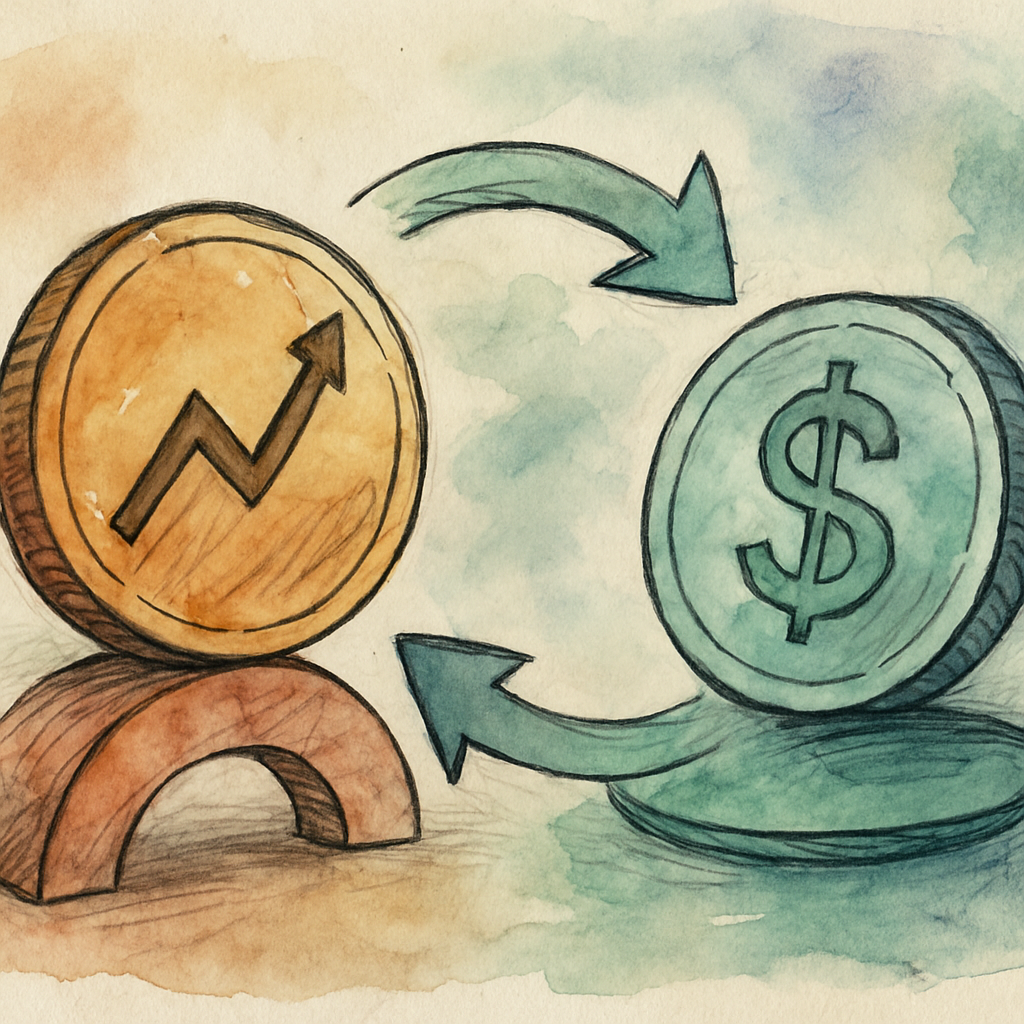 Right Now?" class="rounded-lg my-6 w-full" loading="lazy" width="800" height="450" decoding="async" />
Here’s a quick mental checklist you can run in under a minute.
Ask yourself:
- Time horizon – Do I need this money in the next 3–6 months?
- Current trend – Is the market in a choppy range, or a clear trend?
- Conviction level – Am I holding this coin for a long‑term thesis or a short‑term trade?
- Upcoming events – Are any major risk events on the calendar soon?
- Portfolio mix – How much of my net worth is already in stables vs. volatile crypto?
- Platform risk – Where will I hold the stablecoins? Self‑custody or centralized platform?
If you:
- Need the funds soon
- Are not a long‑term holder of this coin
- See high‑risk events coming
- Already have a lot of exposure to volatility
…then a swap to stablecoins makes a lot more sense.
Holding crypto vs. swapping to stablecoins (quick comparison)
Use this table as a gut check. If you’re clearly in the “short‑term needs / tactical trader” bucket for a portion of your stack, rotating that slice into stables is logical.
For more nuance on the “in‑between” cases, you can read When Swapping to Stablecoins Actually Makes Sense (2025), which zooms in on specific market conditions.
---
How to Swap to Stablecoins Safely (Without KYC or Custody Risk)
If you decide that yes, now is one of those smart moments to rotate into stables, the how matters almost as much as the why.
The main risks to avoid are:
- Leaving large balances on centralized exchanges
- Getting stuck in slow KYC verification when you want to move fast
- Sending funds to the wrong chain or address
Here’s how to do it more safely using a non‑custodial, no‑KYC flow like SwapRocket.
Step 1: Choose what you’re swapping and why
Be specific:
- “I’m converting 1.5 ETH to USDT to lock in profits.”
- “I’m rotating 0.2 BTC to USDT ahead of a big announcement.”
- “I’m moving SOL to USDT to build dry powder for the next trade.”
You can use the SwapRocket exchange if you want a straight swap interface, or the converter if you like to think in terms of “BTC to USDT converter”, “ETH to USDT”, etc.
Step 2: Pick your stablecoin and chain
Decide:
- Which stablecoin (USDT, USDC, DAI, etc.)
- Which chain you want it on (Ethereum, Tron, Solana, etc., depending on fees and your wallets)
On SwapRocket, you can see supported pairs and networks on the supported cryptocurrencies page.
Step 3: Execute a non‑custodial swap
The flow is straightforward:
- Go to the exchange interface
- Select your pair (e.g., ETH → USDT, BTC → USDT, SOL → USDT)
- Enter how much you’re swapping
- Paste your receiving wallet address for the stablecoin
- SwapRocket shows you the expected rate and timing
- You send your crypto to the provided deposit address
- After the required confirmations, your USDT/USDC/DAI arrives in your wallet
No registration. No KYC. No account balance sitting on someone else’s ledger.
If you want a deeper walkthrough for BTC specifically, check out BTC to USDT Guide: Fast, Private Swaps Explained.
Step 4: Decide your exit or re‑entry plan
Before you even click “swap,” decide what happens next:
- Are you keeping the stablecoins as cash for real‑world expenses? Then plan your off‑ramp via a sell crypto or local fiat solution.
- Are you waiting for a better entry on BTC or ETH? Decide your buy‑back zones in advance.
- Are you staying in stablecoins for psychological breathing room? Set a reminder to revisit your plan; idle capital tends to drift.
The goal is to avoid the default path of: swap → feel safe → get bored → chase random altcoins.
If anything in the process is unclear, the FAQ on SwapRocket covers fees, timing, and safety tips in more detail.
---
Real‑World Style Scenarios: Smart vs. Risky Stablecoin Swaps
Let’s run through a few quick scenarios and see how this plays out.
Scenario 1: ETH double, then earnings season
- You bought 2 ETH at $1,500 (total $3,000)
- Price moves to $3,000 (your stack is now worth $6,000)
- Big macro and tech earnings week is coming – you can’t watch markets closely
Smart move:
- Swap 1 ETH → USDT via an ETH to USDT swap page
- You’ve locked in profit and recovered your original capital
- You still ride the upside with 1 ETH if the trend continues
Scenario 2: BTC grinding up, you keep flinching
- BTC has been steadily grinding higher over months
- Every -5% pullback, you panic and swap to USDT
- You end up buying back higher after each bounce
Result: You underperform simple holding.
Here, swapping to stablecoins is not helping. Your problem is emotional management, not risk management. Getting clear on your long‑term plan matters more than toggling between BTC and USDT.
Scenario 3: SOL rally, you want to rotate ecosystems
- You bought SOL cheap and it’s up 4x
- You don’t love the risk profile anymore and want more BTC/ETH exposure instead
One clean path:
- Swap SOL → USDT using a direct SOL to USDT converter
- Later, swap USDT → BTC/ETH when you’ve chosen your levels
You’ve effectively moved from one risk bucket (SOL) to another (BTC/ETH) using stablecoins as a neutral bridge asset.
Scenario 4: You know a big bill is coming
- In three months, you owe $5,000 in taxes
- Right now, you have that amount in a mix of BTC and ETH
Keeping it fully exposed to market swings is gambling with a bill you must pay.
Smart move:
- Swap that $5,000 portion to USDT or USDC and hold it separate
- Let the rest of your portfolio play the market
This is where stablecoins do exactly what they’re meant to do: make short‑term obligations predictable.
---
Related Reading
If you want to go deeper on stablecoin strategy and execution, these are worth your time:
- How Traders Use Stablecoins to Sleep at Night
- When Swapping to Stablecoins Actually Makes Sense (2025)
- BTC to USDT Guide: Fast, Private Swaps Explained
---
Ready to Rotate Into (or Out of) Stablecoins?
Swapping to stablecoins isn’t about being bullish or bearish.
It’s about aligning your risk with your real‑world life – your bills, your sleep, your time horizon, and your conviction.
When it’s time to move, you want the swap itself to be the least stressful part of the process.
With SwapRocket, you can:
- Swap between 200+ coins and stablecoins using the instant exchange
- Use the converter as your ETH to USDT, BTC to USDT, or SOL to USDT calculator and swap tool
- Stay fully self‑custodial – you hold the keys
- Skip KYC entirely for fast, private swaps
If you’re ready to lock in some profits, build dry powder, or just give your nervous system a break, try your next stablecoin rotation on SwapRocket.
You focus on the decision – we’ll handle the swap.
SwapRocket Team
Crypto Exchange Experts
The SwapRocket team provides expert insights on cryptocurrency exchanges and privacy-focused trading.
Ready to Swap?
Exchange crypto instantly with no KYC. Non-custodial, fast, and secure.