Safe No-KYC Crypto Swaps: Avoid Scams & Losses
A practical, beginner-friendly safety guide to no-KYC swaps—avoid scams, wrong networks, and fee traps while swapping in minutes.

| Option | Best for | Main downside | Privacy | Custody |
|---|---|---|---|---|
| Centralized exchange (CEX) | Deep liquidity, advanced trading | KYC, account freezes, withdrawal holds | Low | Custodial |
| DEX (on-chain) | Same-chain swaps, DeFi access | Gas fees, slippage, wallet approvals | Medium-High | Non-custodial |
| Instant swap aggregator (SwapRocket) | Quick cross-asset swaps, simple UX | Not a trading terminal | High (no KYC) | Non-custodial |
Two tabs are open. One is the real exchange site. The other is a perfect-looking clone that a scammer paid $20 to push to the top of a search ad.
You paste your address, hit “Swap,” and… your funds go to a wallet you’ve never seen before.
That’s not a “crypto is risky” problem. That’s a swap hygiene problem—and it’s fixable.
This guide is the simple, real-world checklist I wish every new swapper had. It’s written for you if you want to swap fast, stay private (no KYC), and avoid the traps that quietly drain people every day.
Market snapshot (March 2026): Volatility is still the norm across majors and altcoins. When prices swing, scammers get louder and networks get congested—two things that increase swap mistakes. No live pricing here, but the safety principles below hold in any market.
---
TL;DR — Safe no-KYC swaps in 60 seconds
- Type URLs or use bookmarks. Don’t click search ads for swap sites.
- Match the network to the address (ERC-20 vs TRC-20 vs BEP-20, etc.). Wrong chain = often unrecoverable.
- Do a “small test swap” first when using a new wallet/network (even $10–$20 can save you $2,000).
- Use non-custodial swaps when possible so you’re not parking funds on a centralized exchange.
- Watch the rate type (fixed vs floating) and understand fees—“free swaps” aren’t free.
- Protect yourself from clipboard malware: verify first/last 6 characters of the address every time.
When you’re ready to swap, use a clean flow like SwapRocket’s non-custodial, no-KYC interface at /exchange
---
The real problem: swapping isn’t hard—swapping carelessly is
A crypto swap is basically a digital version of handing someone a $20 bill and expecting a $20 bill back in another currency.
The difference is: in crypto, the “hand-off” is irreversible.
That irreversibility is what gives crypto its power (no chargebacks, no gatekeepers). But it’s also why scammers and simple mistakes hurt more than they should.
Let’s break down the most common ways people lose money when swapping—and what to do instead.
---
The 9 ways people lose money when swapping (and how you avoid each)
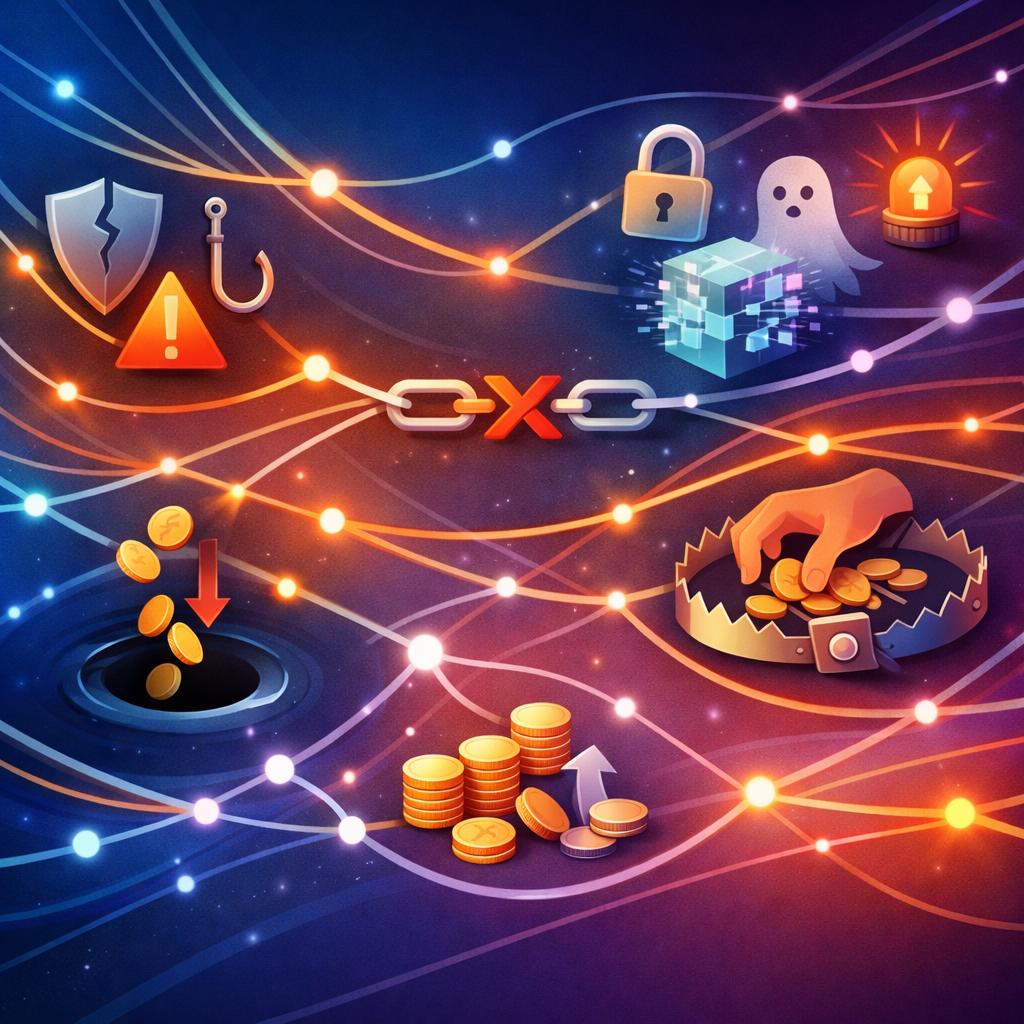
1) The fake website trap (phishing that looks 1:1)
This is the classic.
You search “instant crypto swap no kyc,” click the first result, and the site looks perfect. Same colors, same layout, same claims.
The only difference is the deposit address.
How to avoid it:
- Bookmark the real site and use your bookmark every time.
- Be suspicious of search ads (not just results).
- Check for subtle domain tweaks (like “swaproc ket” or “swaprocket-io”).
If you’re using SwapRocket, start from the homepage and navigate normally
---
2) Wrong chain = wrong destination (the quietest expensive mistake)
This one doesn’t feel like a scam. It feels like “the swap is taking a while.”
Example: you try to send USDT on TRON (TRC-20) to an Ethereum (ERC-20) address. Both might “look like” crypto addresses to a beginner, but they live on different rails.
Often, there’s no support ticket that fixes this.
How to avoid it:
- Confirm coin + network on both ends.
- If the platform shows you network options, choose carefully.
- When in doubt, do a small test first.
Want a quick way to sanity-check what you’re doing? Use the rate tools first
---
3) Address poisoning (when your history lies to you)
Address poisoning is sneaky.
A scammer sends you a tiny transaction from an address that looks similar to someone you’ve paid before. Later, you copy from your transaction history, thinking it’s your friend’s address.
You send the real amount… to the scammer.
How to avoid it (simple and effective):
- Don’t copy addresses from history unless you verify them.
- Verify the first 6 and last 6 characters of the address.
- Save trusted addresses in your wallet’s address book (with labels).
This takes 5 seconds and prevents a very real category of losses.
---
4) Clipboard malware (copy/paste betrayal)
Some malware watches your clipboard. When you copy a crypto address, it swaps it to the attacker’s address.
You paste, it “looks” like the right length, and you send.
How to avoid it:
- Verify first/last 6 characters every time.
- Prefer QR scanning if your wallet supports it.
- Keep your device clean (updates, basic anti-malware hygiene).
This is the crypto equivalent of checking the name on a bank transfer.
---
5) The “free swap” illusion (hidden fees and bad rates)
If you’ve been around crypto long enough, you’ve seen it:
“0% fees! Free exchange!”
Here’s the truth: swaps have costs—network fees, liquidity costs, spread, service fees, or some combination. If a platform says “free,” it usually means you’re paying through the rate.
How to avoid it:
- Compare the expected receive amount, not marketing claims.
- Understand the difference between: - Network fees (paid to miners/validators) - Service fees/spread (paid to the platform/liquidity)
If you want a plain-English breakdown, read
---
6) Fixed vs floating rates (and why people feel “cheated”)
A common frustration:
“I started a swap at one rate and got a different one.”
That’s usually a floating-rate swap during volatility.
Neither rate type is “bad.” But you need to match it to your goal:
- If you want certainty, use fixed (often includes a buffer).
- If you want market-following pricing, use floating.
When networks are busy or prices move fast, fixed can reduce stress.
---
7) Underpaying network fees and timing out
Sometimes your swap isn’t “stuck.” Your transaction is just underpriced.
This shows up most on chains where fees spike during demand. If your sending transaction doesn’t confirm in time, the swap window can expire.
How to avoid it:
- Use your wallet’s recommended fee (not the cheapest).
- Avoid swapping during known rush periods if you’re fee-sensitive.
- If you’re new, prioritize reliability over saving $0.80.
---
8) Sending from an exchange without reading the fine print
Some centralized exchanges (CEXs) batch withdrawals, delay sends, or require extra memo fields.
If you send into a time-sensitive swap flow and the exchange delays your withdrawal, your rate or window can change.
How to avoid it:
- If possible, send from a wallet you control.
- If you must send from a CEX, expect delays and consider fixed rate.
- Double-check if a memo/tag is required (common on some chains).
This is one reason privacy-first users like non-custodial tools: you stay in control.
---
9) Fake “support” in Telegram/Discord
When something feels slow, people panic and ask for help.
Scammers watch for that.
They impersonate support, ask for your TXID, then “helpfully” request:
- your seed phrase
- remote access
- a “verification deposit”
How to avoid it:
- No legit platform needs your seed phrase. Ever.
- Use official support channels only.
- If you need help, use the real contact page
---
The simplest safe-swap checklist (save this)
Before you swap: 90 seconds that prevents 90% of mistakes
- Open from a bookmark (avoid search ads).
- Confirm you’re on the right page
- Check the asset pair and network.
- Decide: fixed or floating rate.
- If it’s your first time on that route, plan a test amount.
If you want a beginner-friendly walkthrough that pairs well with this safety guide, read
During the swap: don’t rush the two “point of no return” steps
- When you paste your receiving address, verify: - first 6 characters - last 6 characters
- Confirm the network matches the address type.
- Send the exact amount requested (if the flow specifies it).
After you send: what “normal” looks like
Most instant swaps complete in minutes, but timing depends on:
- network confirmations
- congestion
- the asset you’re swapping from/to
If you’re worried, start with the basics:
- Do you see your transaction on a block explorer?
- Is it confirmed?
- Did you send on the right network?
If you need official guidance, the FAQ is your friend
---
CEX vs DEX vs instant swap: what’s safest for a beginner?

Different tools solve different problems.
Here’s a simple comparison so you don’t have to guess.
If you’re new and you value speed + simplicity + privacy, an instant swap flow is usually the least stressful way to get the job done.
SwapRocket also aggregates liquidity to keep pricing competitive, supports 200+ cryptocurrencies, and stays non-custodial—meaning you’re not leaving funds sitting in an exchange account.
---
Why non-custodial no-KYC swaps reduce your risk (even if crypto is still crypto)
People often think “no KYC” is only about privacy.
Privacy matters, yes. But there’s also a practical safety angle: less identity exposure, fewer accounts to compromise, fewer databases that can leak.
The hidden risk of “accounts everywhere”
Every custodial account is:
- another password to reuse accidentally
- another email to phish
- another place where your identity can be stored
No-KYC swaps remove a chunk of that surface area.
The custody risk: not your keys, not your coins
Custodial platforms can be great tools, but they come with tradeoffs:
- withdrawal delays
- compliance flags
- platform outages in high volatility
With a non-custodial swap, you’re typically sending from your wallet and receiving back to your wallet—no long-term “parking” in someone else’s account.
If you want the bigger-picture privacy playbook, this is worth reading
---
Real-world examples (so you can spot trouble early)
Example 1: The wrong network almost-loss
You have USDT on TRON because withdrawals are cheap (often around $0.50–$2 depending on the venue). You try to swap into ETH.
You paste an Ethereum address (starts with 0x...) and hit send.
If you send TRC-20 USDT to an ERC-20 address, your money may not arrive—because you essentially mailed a letter to the right “name” in the wrong country.
Fix: Always match the network to the address. If the receiving address starts with 0x, it’s typically EVM-compatible (Ethereum, BNB Chain, etc.)—but that still doesn’t mean the token is on the right chain. Verify explicitly.
Example 2: The “support agent” DM
Your swap is taking longer than expected.
You post on social media. A friendly “Support | Swap Team” account DMs you in 30 seconds.
They ask for your seed phrase “to sync your wallet.”
That’s a scam 100% of the time.
Fix: Never share seed phrases. Use official channels like https://swaprocket.io/contact and the help docs at https://swaprocket.io/faq
Example 3: The bad-rate “free fee” swap
Platform A says 0% fees.
Platform B shows a visible service fee.
But Platform B’s “you receive” is 2.1% higher.
Which one is cheaper? Platform B.
Fix: Ignore fee marketing. Compare the final receive amount and the total cost including network fees.
---
How to swap safely on SwapRocket (the clean, no-drama flow)
If your goal is: swap crypto quickly, stay private, and keep custody, the process should feel straightforward.
Here’s a practical flow you can follow.
1) Check the pair and sanity-check the rate
If you’re doing common routes, you can go direct:
2) Confirm the receiving address (slow down here)
This is where you win or lose the swap.
- Paste address
- Check first/last 6 characters
- Confirm network
3) Consider a test swap if it’s new to you
If it’s your first time swapping to a new wallet, new chain, or new asset:
- test with $10–$20
- then send the full amount
Yes, it costs an extra network fee.
But that small “insurance premium” has saved plenty of people from four-figure mistakes.
4) Track and finish
Once you send, you’ll typically see progress updates until completion.
If something seems off, check FAQ first
---
Extra safety upgrades (worth it if you swap more than once a month)
These aren’t mandatory, but they stack the odds in your favor.
- Use a hardware wallet for larger balances.
- Keep a dedicated “swap wallet” with smaller working amounts.
- Separate devices: if you can, don’t use your daily browsing machine for large swaps.
- Label addresses in your wallet ("My Ledger ETH", "My SOL wallet", etc.).
- Avoid public Wi‑Fi when sending large transactions.
Think of it like travel money:
You don’t carry your life savings in your pocket on vacation. You carry what you need for the day.
---
FAQ-style quick answers (the stuff people actually ask)
Is a no-KYC swap “anonymous”?
It’s private in the sense that you’re not uploading identity documents.
But blockchains are still transparent. Your best move is to practice good on-chain hygiene and avoid linking your real identity to addresses you use.
How long should a swap take?
Often a few minutes, but it depends on:
- confirmation requirements
- network congestion
- the assets involved
If it’s taking longer, it’s usually a network confirmation issue—not a “lost funds” issue.
Can I buy crypto too?
If you need an on-ramp, SwapRocket also offers buying options here
And if you’re looking to cash out, there’s a dedicated flow
What coins are supported?
SwapRocket supports 200+ cryptocurrencies. Browse the list here
---
Related Reading (recommended next)
- Your first swap walkthrough
- Fees demystified (so you stop overpaying)
- The full privacy-first swaps guide
---
Ready to swap safely (without KYC and without drama)?
If you take nothing else from this article, take this: slow down for 30 seconds at the address + network step. That’s where almost every preventable loss happens.
When you’re ready, use SwapRocket for a fast, non-custodial, no-KYC swap with a clean interface and competitive rates via liquidity aggregation:
Swap smart. Stay in control.
SwapRocket Team
Crypto Exchange Experts
The SwapRocket team provides expert insights on cryptocurrency exchanges and privacy-focused trading.
Swap Now — No KYC Required
Follow the steps above and start your swap in under a minute. Non-custodial, anonymous, and fast.


