Leaving CEXs for Self-Custody: Complete Swap Guide
Tired of trusting exchanges with your coins? Learn exactly how to exit centralized exchanges, move to self‑custody, and use private swaps to stay flexible.

| Feature | Centralized Exchange (CEX) | Self-Custody + SwapRocket |
|---|---|---|
| Control of private keys | Exchange controls keys | You control keys in your own wallets |
| KYC requirements | Almost always required | No KYC for swaps on SwapRocket |
| Custody / counterparty risk | High – exchange can freeze or lose funds | Minimal – risk limited to each on‑chain transaction |
| Asset coverage | Many spot + derivatives pairs | 200+ coins via aggregated liquidity |
| Swap speed | Fast internal order‑book trades | Typically minutes, depending on network confirmations |
| Privacy | All trades tied to your verified identity | Wallet‑based, no account – more private |
| Geo‑blocking & restrictions | Common, varies by country | No account to block; on‑chain access as long as the chain works |
Deposit some cash, buy some Bitcoin or ETH, watch the number go up in a clean app. Done.
Until one day you see the notification no crypto holder ever wants to see:
"Withdrawals temporarily suspended."
That’s the moment a lot of traders realize: “Those coins weren’t really mine.” This guide is about fixing that — leaving centralized exchanges (CEXs) and going full self‑custody — without giving up the ability to swap, bridge, or trade.
---
TL;DR – Leaving CEXs for Self-Custody
- If your coins sit on a CEX, you have an IOU, not true ownership.
- Full self‑custody means you control private keys in non‑custodial wallets.
- Plan your exit: map positions, choose wallets, unwind leverage/staking, and withdraw in stages.
- Use non‑custodial, no‑KYC tools like SwapRocket to swap across chains (e.g. ETH→USDT, SOL→USDT, BTC→XMR) after you withdraw.
- Always test with a small transaction, secure your seed phrase offline, and double‑check addresses.
- For more operational detail, see our dedicated guide: Leaving CEXs: Step‑by‑Step Guide to Full Self-Custody.
Market snapshot: As of December 15, 2025, no live market data is included here. Always check real‑time rates directly in the SwapRocket converter or your preferred price feed.
---
Why more traders are leaving centralized exchanges
The story is the same across bull and bear markets:
- Exchanges grow fast.
- Users park serious money there.
- A few big platforms blow up, freeze withdrawals, or change rules overnight.
Each time this happens, another wave of people realize why Bitcoin’s first principle is “not your keys, not your coins.”
The hidden risks of “convenient” CEX custody
On the surface, CEXs feel safe:
- Password + 2FA login
- Customer support
- A clean dashboard showing your BTC, ETH, SOL, USDT balance
But underneath, there are trade‑offs you can’t see on the home screen:
- Custody risk: Your assets are pooled with everyone else’s. If the exchange mismanages funds, your coins are at risk.
- Withdrawal risk: At any time, withdrawals can be paused due to hacks, insolvency, or “maintenance.”
- KYC & surveillance: You’ve handed over identity documents. Your trading history can be tied directly to your real‑world identity.
- Geo‑blocking: Regulations can change and suddenly your country is restricted, or specific assets are delisted.
None of that exists if you’re holding crypto in your own non‑custodial wallet.
Red flags: signs it’s time to exit your CEX
If you see any of these, consider them your wake‑up call:
- Unusually long withdrawal delays or “manual reviews”
- New, aggressive KYC/AML requests for simple withdrawals
- Sudden delisting of coins you hold (especially smaller caps)
- Opaque or confusing statements about reserves and audits
- Regular “maintenance” windows that freeze deposits/withdrawals
Even without drama, many traders now treat CEXs as on‑ramps and off‑ramps only, not long‑term storage.
What “full self-custody” really means
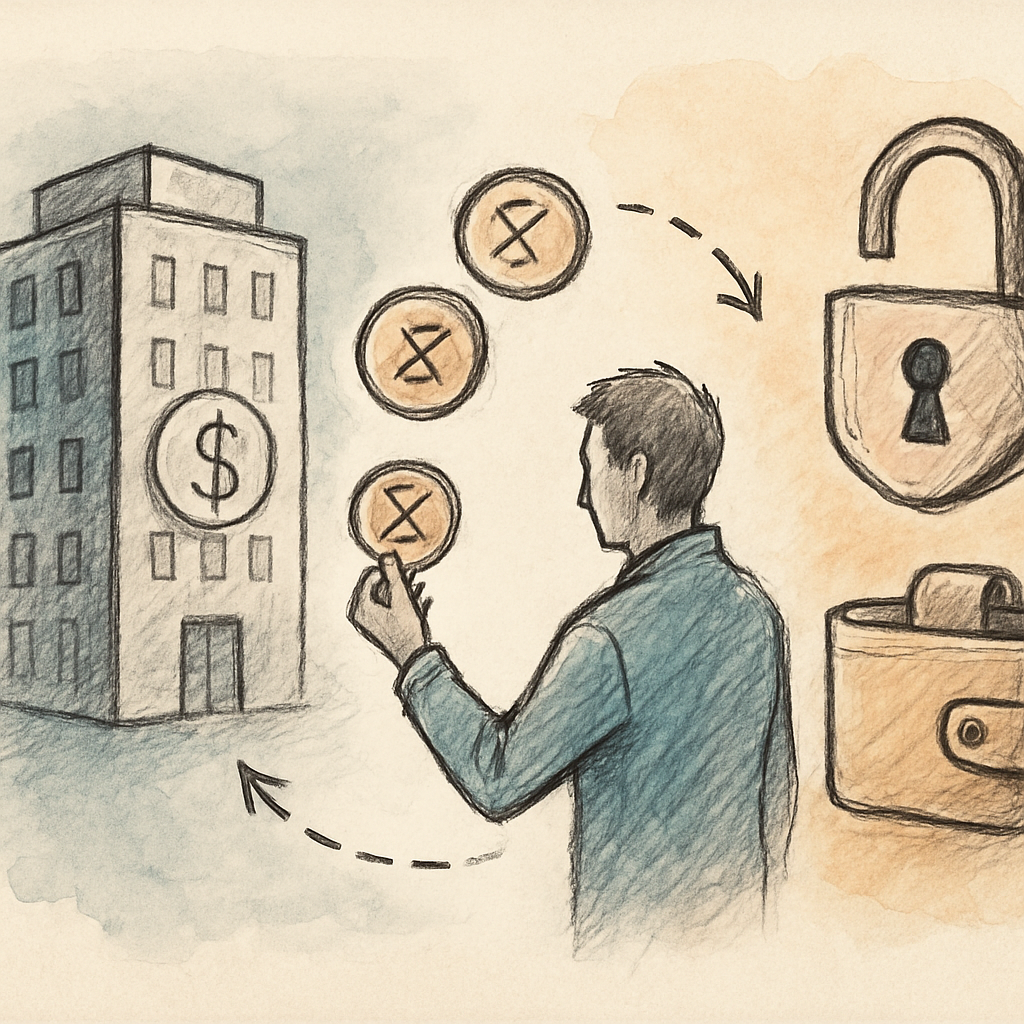
Self‑custody is simple in theory: you control the private keys to your coins.
In practice, that usually means you’ll be using one or more of:
- Hardware wallets (Ledger, Trezor, etc.)
- Non‑custodial mobile wallets (Trust Wallet, Phoenix, BlueWallet, etc.)
- Browser extension wallets (MetaMask, Rabby, Phantom, XDEFI)
Each wallet holds keys for one or more blockchains (Bitcoin, Ethereum, Solana, etc.). When you send crypto, you sign with your keys — not the exchange’s.
What full self‑custody looks like for a typical trader
Most active traders who leave CEXs end up with a setup like:
- A hardware wallet for long‑term holdings (BTC, ETH, SOL, maybe a few blue‑chip alts)
- One or two hot wallets for daily use (browser + mobile)
- A privacy coin wallet (e.g. XMR) for when they don’t want their entire net worth broadcast on‑chain
If you’re fully leaving CEXs, you’ll also want a way to swap and bridge assets privately, without going back to a centralized exchange every time you need to rebalance.
That’s where non‑custodial swap tools like SwapRocket’s exchange come in.
Step-by-step plan to exit CEXs into self-custody
Leaving a CEX isn’t just “hit withdraw and hope.” Think of it like moving apartments: a bit of planning saves you a lot of stress.
Here’s a practical plan you can follow.
1. Map out everything you hold on the CEX
Open your exchange account and list:
- Spot balances (BTC, ETH, SOL, USDT, XRP, BNB, etc.)
- Margin or leveraged positions
- Futures/options contracts
- Staking, earn programs, or “flexible savings”
- NFTs or other locked assets
You can’t fully exit until all of this is either closed, settled, or withdrawn.
2. Decide where each asset will live
Ask yourself, for each coin:
- Do I want to hold this long term?
- On which network? (e.g. native BTC vs wrapped BTC on Ethereum)
- In which wallet?
Sometimes it’s smarter to consolidate assets first. For example:
- Turn random small altcoins into a single liquid asset like USDT or ETH.
- Convert Solana tokens into SOL or USDC before withdrawing.
If you’re using stablecoins as a bridge, check which ones your destination wallets support. Many traders standardize on USDT (Tether) or USDC.
3. Unwind leverage and staking before you move
Self‑custody is incompatible with:
- Leveraged positions (margin, perpetuals, futures)
- Locked staking and “earn” products
Close these out while you’re still on the CEX. Yes, you’ll pay funding or exit fees, but that’s the cost of taking control.
If you’re holding staked ETH on an exchange, for example, you may need to:
- Unstake or convert it back to regular ETH.
- Wait for any unlocking period.
- Withdraw ETH to your self‑custodial wallet.
4. Choose your withdrawal asset(s)
You don’t always want to withdraw exactly what you hold.
Examples:
- You hold ETH, but plan to hedge into stablecoins? You might convert ETH→USDT on your CEX or later via a non‑custodial ETH to USDT converter.
- You hold many small alt positions, but don’t want 20 on‑chain transactions. Convert them to one major coin first (BTC, ETH, USDT, USDC, SOL).
Common withdrawal strategies:
- BTC / ETH maxis: Withdraw in BTC or ETH only.
- Stablecoin first: Withdraw mostly in USDT/USDC (easier to rebalance later).
- Chain‑specific: Withdraw each asset to its native chain wallet (BTC→Bitcoin wallet, SOL→Solana wallet, etc.).
You can always rebalance later using non‑custodial swaps like:
5. Set up and test your wallets
Before withdrawing anything serious:
- Create your non‑custodial wallets (hardware + hot wallet).
- Write down your seed phrases on paper (or a metal backup), offline.
- For multi‑chain setups, confirm the correct deposit addresses for each chain.
Then do a test transaction:
- Withdraw a tiny amount (e.g. $10–$20) of BTC, ETH, or USDT.
- Confirm it arrives in your wallet.
- Only then, increase the size.
6. Withdraw in stages, not all at once
Instead of one huge withdrawal:
- Break it into 2–5 separate withdrawals, especially if it’s a life‑changing amount.
- Start with lower‑priority funds, end with your core holdings.
This protects you from:
- Copy‑paste mistakes (wrong address)
- Network congestion or unusual fees
- Exchange hiccups or manual reviews
Once you’re fully withdrawn, delete API keys, close open orders, and consider significantly reducing or even closing your CEX account.
7. Rebalance and bridge after you’ve exited
Once your coins are sitting safely in self‑custodial wallets, you can:
- Swap assets (e.g. convert USDT to ETH, or BTC to USDT)
- Bridge between chains (e.g. SOL→ETH, SOL→USDC, SOL→TON)
- Move into privacy coins (e.g. BTC→XMR)
This is where a non‑custodial, no‑KYC service like SwapRocket’s exchange shines.
For an even more detailed operational checklist, check out Leaving CEXs: Practical Guide to Full Crypto Self-Custody.
Using SwapRocket for private swaps and bridges

Once you’ve walked out the CEX door, a new question pops up:
“How do I keep trading and rebalancing without going back to a centralized exchange?”
SwapRocket is built precisely for that.
Non-custodial by design
SwapRocket is a non‑custodial instant swap platform:
- We never hold your private keys.
- You send from your own wallet.
- You receive directly to your own wallet.
Your coins are always in self‑custody, even while you’re swapping.
No KYC, privacy‑first
Most CEXs require full KYC (ID, selfies, proof of address) even for simple swaps like ETH to USDT or BTC to USDT.
SwapRocket lets you:
- Swap over 200+ cryptocurrencies with no KYC.
- Avoid opening new centralized accounts just to convert something simple like XRP to USDT or BNB to BTC.
- Protect your privacy while still rebalancing your portfolio.
Multi-chain swaps in minutes
Because SwapRocket aggregates liquidity across multiple providers, you typically get:
- Fast confirmations (often within minutes, depending on the chain)
- Competitive rates, updated in real time in the converter
- Support for popular routes like: - ETH→USDT and USDT→ETH - BTC→USDT (see our in‑depth BTC to USDT Guide) - SOL→ETH (also see: Sol to ETH Calculator: Real-Time Rates & Tips) - SOL→USDT or SOL→USDC for Solana traders going stable - XRP→USDT when exiting an XRP position - BNB→BTC to consolidate into Bitcoin - SOL→TON if you’re rotating into the Toncoin ecosystem
Example: leaving a CEX with SOL, ending up in ETH
Say you currently hold 500 SOL on a CEX, but you want to:
- Move funds to your own wallets
- End up with ETH on Ethereum mainnet
- Avoid CEXs and KYC from now on
You could:
- Withdraw your SOL from the CEX to your non‑custodial Solana wallet.
- Open SwapRocket’s SOL→ETH exchange page.
- Enter how much SOL you want to swap, paste your self‑custodial ETH address.
- Send SOL from your wallet to the provided deposit address.
- Receive ETH directly into your Ethereum wallet, in minutes.
All without an account, login, or KYC.
Example: leaving with BTC, parking in USDT
If you’re nervous about volatility but don’t trust CEXs, a common pattern is:
- Withdraw BTC from the CEX to your self‑custodial Bitcoin wallet.
- Use SwapRocket’s BTC→USDT converter to move into stablecoins.
- Keep USDT in your own wallet (on a chain you trust, like Tron, Ethereum, or another supported network).
When you’re ready to get back into BTC or ETH later, you can instantly convert USDT back to ETH or BTC without ever touching a centralized account.
CEX vs self-custody + SwapRocket: quick comparison
Here’s how staying on a CEX compares to going full self‑custody while using a non‑custodial swap service like SwapRocket:
Common exit routes (with real swap paths)
To make this concrete, here are a few realistic scenarios traders use when leaving CEXs.
1. ETH to USDT (or USDT to ETH) for flexible positioning
If most of your portfolio is in ETH, but you’re unsure about short‑term price action, you might:
- Withdraw ETH from the CEX to your own wallet.
- Use an ETH to USDT converter like SwapRocket to park funds in USDT.
- Later, when conditions look better, convert USDT back to ETH in a single non‑custodial swap.
This way, you’re managing your risk and your custody at the same time.
2. XRP to USDT when your trading thesis changes
If your thesis on XRP changes, you don’t need a CEX to exit:
- Withdraw XRP to your XRP wallet.
- Use SwapRocket to convert XRP→USDT.
- Hold USDT in self‑custody or swap into another asset (BTC, ETH, SOL) when a new opportunity appears.
No centralized order book, no new account, no waiting for approvals.
3. Solana to USDT or USDC: de‑risking your SOL exposure
Solana traders often want to lock in gains without fully leaving the ecosystem.
Flow example:
- Withdraw SOL from your CEX to your Solana wallet.
- Use SwapRocket to swap SOL→USDT or SOL→USDC.
- Keep the stablecoins in your Solana wallet or later bridge/swap them to Ethereum or another chain.
You can check expected routes and rates with tools like our Sol to ETH Calculator: Real-Time Rates & Tips if you decide to rotate into ETH later.
4. Convert BNB to BTC: consolidating into Bitcoin
Maybe you started on a BNB‑centric exchange and now want to consolidate into BTC and leave.
You could:
- Withdraw BNB to your non‑custodial BNB wallet.
- Use SwapRocket to convert BNB→BTC in a single swap.
- Hold BTC in cold storage going forward.
This removes the need to leave your assets sitting on a BNB‑heavy CEX just to trade the BNB/BTC pair.
5. Swapping SOL to TON: exploring new ecosystems privately
If you’re rotating from Solana into the Toncoin ecosystem:
- Withdraw SOL from your exchange.
- Use SwapRocket to swap SOL→TON.
- Receive TON directly into your Ton‑compatible wallet.
You’ve effectively bridged ecosystems without trusting a centralized bridge or opening a new exchange account.
Security checklist when going full self-custody
Freedom comes with responsibility. Before you move serious funds off CEXs, run through this checklist:
- Seed phrase security: Store your seed phrases offline (paper or steel). Never in screenshots, cloud notes, or email.
- Hardware wallet: Use a hardware wallet for long‑term holdings; it’s worth the ~$70–$150 for peace of mind.
- Device hygiene: Keep your main crypto device clean: updated OS, no random browser extensions, unique passwords.
- 2FA & email security: Even if you’re leaving CEXs, secure the email addresses tied to your accounts and wallets.
- Test transactions: For every new chain or wallet, start with a small test amount. Scale up only when you’re sure.
- Address checks: Double‑check addresses, especially when swapping similar assets (e.g., USDT on different chains). Watch out for “address poisoning” scams.
If you’re unsure about anything, read through the SwapRocket FAQ before sending large amounts.
Frequently asked questions about leaving CEXs
“Is it risky to leave funds on a CEX for now?”
It depends on your risk tolerance.
Many users treat CEXs as temporary on‑ramps/off‑ramps, not storage. The real risk is concentration: if 90% of your net worth is on a single exchange, you’re taking on that platform’s business risk — something you can’t control.
Self‑custody spreads this risk back to you, where it belongs.
“What if I still need to buy or sell crypto with fiat?”
Going full self‑custody doesn’t mean you’ll never touch fiat.
You can:
- Use CEXs strictly as short‑term ramps (deposit, buy, withdraw immediately).
- Explore third‑party fiat partners via Buy Crypto and Sell Crypto, understanding that most fiat services will require some level of KYC.
The key is: don’t leave large balances sitting there.
“Can I still trade actively without a CEX account?”
You lose access to certain things (high‑leverage derivatives, order‑book micro‑scalping), but you keep a lot of flexibility:
- Spot swaps between major assets (e.g., BTC, ETH, USDT, SOL, XRP, BNB, TON).
- Cross‑chain swaps (SOL→ETH, BNB→BTC, BTC→XMR, etc.).
- Privacy‑preserving moves (e.g. BTC→XMR and back).
All of this can be done directly from your wallet using a non‑custodial platform like SwapRocket’s exchange.
“How do I know which coins SwapRocket supports?”
You can always check the full list on our Supported Cryptocurrencies page.
If you’re planning a complex exit (multiple chains, many coins), it’s worth:
- Listing all assets you hold.
- Checking which pairs are directly supported.
- Planning a path of 1–2 hops max to reach your ideal final portfolio.
If you still have questions, you can learn more About SwapRocket, read what other users say on Reviews, or reach out via Contact.
Related Reading
If you’re serious about going full self‑custody, these articles are worth your time:
- Leaving CEXs: Step‑by‑Step Guide to Full Self-Custody
- Leaving CEXs: Practical Guide to Full Crypto Self-Custody
- BTC to USDT Guide: Fast, Private Swaps Explained
You can also browse the rest of our content on the SwapRocket blog for more guides and strategies.
Ready to leave CEXs? Here’s your next move
If you’re still reading, you already know the truth: leaving your coins on centralized exchanges long term is a bet on someone else’s risk management.
You don’t have to accept that.
Here’s a simple action plan:
- Map your current CEX holdings and close complex positions.
- Set up secure self‑custodial wallets and back up your seed phrases.
- Withdraw in stages, starting with small test amounts.
- Use SwapRocket’s exchange or converter to rebalance — ETH→USDT, BTC→USDT, SOL→ETH, XRP→USDT, BNB→BTC, and more — without KYC.
- If you’re unsure about anything, read the FAQ or talk to us via Contact.
You get the best of both worlds: full self‑custody with the ability to swap across 200+ cryptocurrencies in minutes, using a simple, clean, non‑custodial interface.
Take back control of your crypto today — and let CEXs be a backup tool, not the place where your entire net worth lives.