Privacy-First Crypto Playbook: Move Funds Anonymously
A practical, privacy-first guide to moving crypto across chains using no-KYC swaps, stablecoins, and smart wallet habits—without losing control of your keys.

| Your goal | Common route example | Why people use it | Trade-offs |
|---|---|---|---|
| Move from Solana to Ethereum | SOL → ETH | Cross-chain without accounts; fast for “get me there now” moves | Rate + network conditions can vary |
| Park value during volatility | ETH → USDT | Reduces exposure to price swings; easy budgeting | Stablecoin issuer risk; chain choice matters |
| Convert BTC to spending balance | BTC → USDT | Quick conversion without trading accounts | Needs careful address hygiene |
| Reduce linkability after KYC | KYC withdrawal → buffer wallet → swap → private wallet | Breaks “straight line” from identity to private funds | Requires discipline (fresh addresses, no consolidation) |
| Stronger on-chain privacy | Asset → XMR → Asset | Uses privacy-by-design coin as a layer | Extra step; liquidity/rates vary |
You just need to have lived through one “Please upload ID to continue” pop-up at the exact moment you’re trying to move money.
The truth is, most privacy-focused crypto users aren’t doing anything shady. They’re just trying to:
- avoid unnecessary KYC exposure
- keep control of their keys
- move between chains without leaving a neat, trackable trail
This playbook walks you through how anonymous (or at least privacy-minded) traders actually move funds in 2025—using realistic workflows you can copy.
TL;DR (Quick Playbook)
- Think in workflows, not “one magic swap.”
- Use non-custodial, no-KYC swaps when you need flexibility across chains.
- For “parking,” stablecoins like USDT/USDC can help—but choose chain + risk level wisely.
- For stronger privacy, routes that include XMR (Monero) are common.
- Minimize leaks: fresh addresses, no address reuse, avoid mixing identities across wallets.
- When you’re ready to swap, use SwapRocket: non-custodial, no KYC, typically minutes, and 200+ assets via liquidity aggregation.
---
The privacy mindset: reduce exposure, don’t chase perfection
If you go looking for “perfect anonymity,” you’ll end up in a rabbit hole.A better goal (and what most experienced users actually do) is minimizing KYC exposure and reducing linkability—without turning every transaction into a paranoid ritual.
Here’s the mental model that works:
Privacy is a leak management game
Every move you make leaks something:- Your exchange account leaks identity (KYC).
- Your on-chain trail leaks patterns.
- Your address reuse leaks relationships.
- Your timing leaks behavior.
Your job is to avoid the big leaks first.
In practice, that usually means:
- Avoid custodial choke points when you can.
- Don’t consolidate everything into one address.
- Don’t tie your “public identity” wallet to your “private activity” wallet.
SwapRocket helps with the first one because it’s non-custodial (you keep control) and no-KYC (privacy-first by design). If you want to see how no-KYC swaps work at a high level, this guide is a great companion: Privacy-First Crypto Swaps: Complete Guide to No-KYC & Anonymous Exchanges (2025).
Quick market snapshot (so the examples feel real)
As of 2025-12-25, the market looks like this:- Bitcoin (BTC): $87,530.00 (24h +0.90%)
- Monero (XMR): $440.86 (24h +3.37%)
Prices move, but the workflows below don’t depend on perfect timing.
---
Your toolkit: what anonymous traders actually use
Before we dive into step-by-step routes, let’s get clear on the tools.
1) A wallet setup that matches your privacy goals
Most privacy-first users don’t use one wallet for everything.They use at least two:
- A “public” wallet: interacts with KYC ramps, known exchange addresses, or public-facing activity.
- A “private” wallet: used for swaps, cross-chain moves, and longer-term holdings.
Simple rule: don’t mix these two worlds unless you intentionally want them linked.
2) A non-custodial, no-KYC swap platform
This is where instant swaps shine.Instead of making an account, depositing, trading, withdrawing (and leaving a paper trail), you swap directly—often in minutes.
On SwapRocket, you can do that from the main swap flow: Exchange.
You also have quick tools for planning:
- Converter for “how much will I get?” style checks
- FAQ for common questions like ETA, confirmations, and refunds
3) Stablecoins (useful, but not magically “safe”)
Stablecoins are popular for privacy workflows because they’re convenient “value parking.”But they come with trade-offs:
- They can be freezable (issuer risk).
- Some chains are more monitored than others.
- Using stablecoins doesn’t automatically make activity private.
Still, “convert ETH to USDT” and “eth to usdt converter” are popular queries for a reason: stablecoins are how many people reduce volatility while moving between assets.
If you want a direct route, you can use: ETH to USDT.
---
Real-world workflows: how anonymous traders move funds
Now the part you came for.These are common, boringly effective routes privacy-focused users use to move funds between chains and assets.
Workflow A: “I have SOL, I need ETH” (fast cross-chain move)
This is the classic “Solana to Ethereum” problem.Maybe you’re:
- moving from a SOL-only DApp back to the Ethereum ecosystem
- paying someone who only accepts ETH
- switching to ETH for a different DeFi strategy
Typical route: SOL → ETH via a no-KYC instant swap.
On SwapRocket, you can run it directly here: SOL to ETH.
How privacy-focused traders do it (best practice):
- Use a fresh ETH receiving address (don’t reuse your main address if you care about linkability).
- Avoid sending the SOL from an address that’s already tied to your identity (like a centralized exchange withdrawal address that’s been reused).
- If your SOL comes from an on-ramp or exchange, consider a buffer step (see Workflow D).
Time expectations (realistic):
Cross-chain swaps vary, but many complete in minutes, depending on network conditions and required confirmations.
Workflow B: “I want to park value in USDT without KYC”
This is one of the most common behaviors in choppy markets.Let’s say you made profit on SOL, and now you want to chill in stablecoins.
Typical route: SOL → USDT
You can check the live conversion path here: SOL to USDT converter.
Privacy-minded twist: pick your chain intentionally.
USDT exists on multiple chains (and the “best” one depends on your goal):
- Want broad exchange support? You’ll often see people choose a major chain.
- Want low fees for moving around? People often look for cheaper networks.
- Want maximum composability in DeFi? People tend to stay where their apps are.
The point isn’t “one chain is perfect.”
The point is: choose the chain that matches what you’ll do next, so you don’t have to do extra moves that create extra linkable events.
Workflow C: “I need BTC → USDT (or the other way around) without accounts”
This is the “I just want a clean conversion” workflow.It’s popular with:
- freelancers paid in BTC who budget in dollars
- traders reducing volatility
- people rotating between store-of-value and stable value
For planning, this page is handy: BTC to USDT converter.
Privacy habit that matters a lot here:
- Don’t withdraw BTC from a KYC exchange straight into the same address you use for private activity.
Even if you do a no-KYC swap afterward, the linkage point is still obvious.
Workflow D: “De-link from a KYC exchange withdrawal” (the ‘buffer wallet’ approach)
Let’s be honest: most people start somewhere that touched KYC.A paycheck hits a bank. A debit card buy happens. A centralized exchange is used once.
The privacy move isn’t to pretend that never happened.
The move is to stop the KYC trail from following you forever.
Common pattern:
1) Withdraw from the KYC platform to a buffer wallet (fresh address)
2) From the buffer wallet, do a swap (or multiple smaller swaps)
3) Land funds in a separate private wallet
This doesn’t make history disappear.
But it reduces straightforward address clustering, especially if you follow basic hygiene:
- don’t consolidate multiple withdrawals into one big UTXO/address if you can avoid it
- don’t always swap the exact same sizes at the exact same times
- don’t reuse deposit/receive addresses
If you’re transitioning away from custodial platforms entirely, pair this with: Leaving Centralized Exchanges: Full Self-Custody Guide.
Workflow E: “I want stronger privacy” (using XMR as a privacy layer)
When people say “anonymous crypto,” what they often mean is strong on-chain privacy.That’s where Monero (XMR) enters the conversation.
A very common privacy-focused route looks like:
- Asset A → XMR → Asset B
The logic is simple: XMR is designed to resist chain surveillance by default.
If you want the deep dive on how Monero privacy actually works (in plain English), this is worth reading: Monero (XMR) Privacy Guide.
And if you want a practical path many users choose, you can start here: BTC to XMR.
Important note (no fear, just reality):
XMR routes can be powerful for privacy, but they’re not “set and forget.” You still need good wallet habits (fresh addresses, avoid identity mixing, etc.).
---
One table that makes this whole thing click
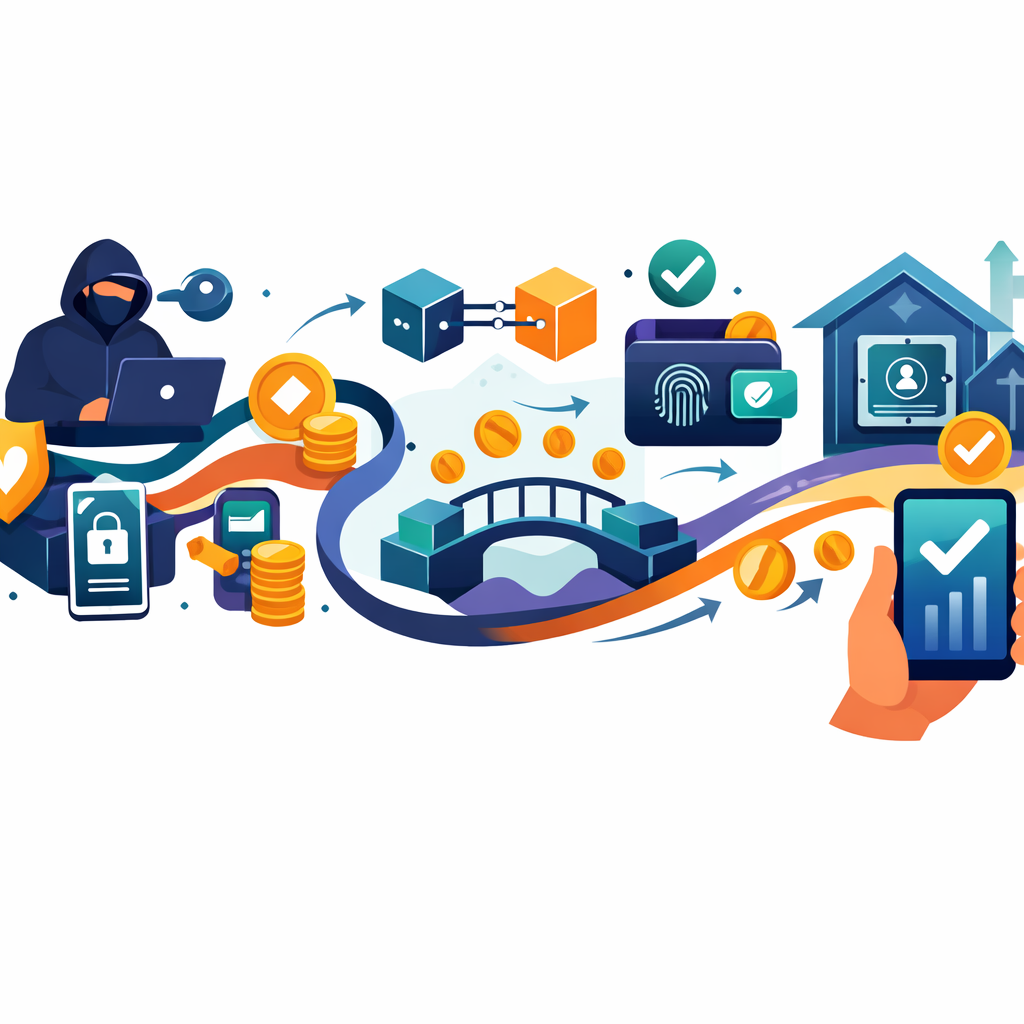
Different goals call for different routes.
Here’s a simple cheat sheet of how privacy-minded users typically think about it.
---
“But what about calculators?” How smart swappers plan the numbers
A lot of SwapRocket search demand is basically: “Just tell me what I’ll get.”That’s why converters are so popular—think “sol to eth converter,” “eth to usdt calculator,” “bitcoin to usdt converter,” and so on.
Here’s the practical way to use a converter without overthinking it:
Use converters for sanity checks, not perfect predictions
Rates shift quickly.What matters is:
- Are you in the right ballpark?
- Does the route make sense (chain, asset, fee profile)?
- Are you choosing a network that won’t force a second swap later?
For planning:
If you’re specifically doing stablecoin conversions, this direct route is common: ETH to USDT.
---
Privacy hygiene that gives you the biggest wins (without turning your life into a spreadsheet)
You can do “everything right” on a no-KYC swap and still leak privacy through basic mistakes.These are the habits that matter most.
1) Stop reusing addresses
If you take one thing from this article, take this.Address reuse is like posting your home address publicly and then being surprised people connect your mail.
Do this instead:
- Use a new receiving address for each meaningful inbound transfer.
- Separate “public” and “private” wallets.
2) Don’t consolidate funds unnecessarily
Consolidation makes analysis easier.If you merge 12 small inputs into one big output every time, you’re drawing a neat map.
A more privacy-minded approach:
- keep funds segmented by purpose
- only consolidate when you truly need operational simplicity
3) Avoid identity mixing across chains
A sneaky leak happens when you:- use the same ENS name everywhere
- post a public address on socials
- then send funds to/from it as part of your “private” workflow
Pick lanes.
4) Watch your “behavioral fingerprint”
You don’t need to randomize everything.But if you always:
- swap at exactly 09:00 UTC
- swap the exact same sizes
- swap in the same sequence
…you create patterns.
Even changing sizes by small amounts and avoiding rigid schedules reduces linkability.
5) Use platforms that don’t force identity capture
This is where no-KYC matters.If a platform requires an account, email verification, ID uploads, and device fingerprinting, you’re giving up privacy before you even start.
SwapRocket is built for the opposite experience:
- No KYC required
- Non-custodial flow (you control your funds)
- Fast swaps (often minutes)
- Competitive rates via liquidity aggregation
- 200+ cryptocurrencies supported
If you want to browse what’s available, check Supported cryptocurrencies.
---
Three example “day in the life” scenarios (copy these)
Sometimes it’s easier when it feels like a real person.Scenario 1: The freelancer who gets paid in ETH but spends in USDT
You get paid 1–2 times a month in ETH.Rent and bills are basically USD, so volatility is stressful.
A privacy-first workflow might look like:
- Receive ETH in your “income wallet”
- Swap a portion via ETH to USDT
- Hold USDT on the chain you actually use next (don’t over-optimize)
You’re not trying to “disappear.”
You’re trying to avoid unnecessary identity capture and keep your spending plan stable.
Scenario 2: The DeFi user moving from Solana to Ethereum for a new opportunity
You’re in a SOL ecosystem strategy, then a new ETH opportunity pops up.Instead of opening accounts and moving through multiple platforms:
- Check route sizing in Converter
- Swap via SOL to ETH
- Receive to a fresh ETH address dedicated to that strategy
The big privacy win is keeping strategies separated rather than blending everything into one mega-wallet.
Scenario 3: The privacy maximalist who uses XMR as a bridge
You don’t want your activity easily traceable across chains.A common approach:
- Move from BTC into XMR: BTC to XMR
- Then swap from XMR into the asset you actually want to use
If you’re going to do this, it’s worth understanding the “why” behind Monero’s privacy model: Monero (XMR) Privacy Guide.
---
Common questions (the stuff people only admit after they’ve made a mistake)
“If it’s no-KYC, am I automatically anonymous?”
No.No-KYC means the platform isn’t collecting identity docs.
Your privacy still depends on:
- where your funds came from
- your address hygiene
- your on-chain behavior
“How fast are swaps, realistically?”
Many swaps complete in minutes, but it depends on:- network congestion
- required confirmations
- the specific assets/chains you choose
If you want the practical details (and troubleshooting steps), the FAQ is the fastest way to get clarity.
“What if I send the wrong network?”
This is one of the most painful mistakes.Before you swap, double-check:
- you selected the right chain/network for the receiving wallet
- the receiving address supports that asset on that chain
When in doubt, test with a smaller amount first.
---
Your practical checklist: safer swaps in 15 minutes
If you want a simple, repeatable routine, use this.Before the swap
- Create a fresh receiving address - Confirm the correct network/chain - Decide your goal: “move chains,” “park stable,” or “add privacy layer” - If coming from KYC funds, consider a buffer wallet firstDuring the swap
- Don’t multitask—most errors are attention errors - Save your transaction details until completeAfter the swap
- Don’t immediately merge new funds into a heavily linked address - Label wallets by purpose (even a simple naming system helps)---
Related Reading (go deeper)
- Privacy-First Crypto Swaps: Complete Guide to No-KYC & Anonymous Exchanges (2025) - Monero (XMR) Privacy Guide: Everything You Need to Know About Private Crypto - Leaving Centralized Exchanges: Full Self-Custody Guide---
Ready to move funds privately—without giving up control?
If you want a straightforward way to swap across chains without creating an account or handing over personal documents, SwapRocket is built for exactly that.Start your swap here: Swap on SwapRocket.
Want to plan first? Use the Converter. And if you have any “what if” questions before you move, the FAQ is the fastest way to avoid costly mistakes.
SwapRocket Team
Crypto Exchange Experts
The SwapRocket team provides expert insights on cryptocurrency exchanges and privacy-focused trading.
Swap Now — No KYC Required
Follow the steps above and start your swap in under a minute. Non-custodial, anonymous, and fast.


